People will ask me, "What's so bad about kissing all the frogs on my way to finding 'Mr. or Mrs Right.'" Actually when you're on the upward swing in a developing relationship it really doesn't feel like it matters much; so the issue just isn't on the radar. Right--I think you know what I mean? But when for whatever reasons a relationship you had great hopes for starts to fall apart, then the personal disappointment and confusion you feel triggers those painful thoughts, "Why couldn't I see this coming earlier--why do I feel so bad and how could I be so stupid?!"
Monday, May 7, 2012
Are you still "kissing all those frogs?"
People will ask me, "What's so bad about kissing all the frogs on my way to finding 'Mr. or Mrs Right.'" Actually when you're on the upward swing in a developing relationship it really doesn't feel like it matters much; so the issue just isn't on the radar. Right--I think you know what I mean? But when for whatever reasons a relationship you had great hopes for starts to fall apart, then the personal disappointment and confusion you feel triggers those painful thoughts, "Why couldn't I see this coming earlier--why do I feel so bad and how could I be so stupid?!"
Monday, March 26, 2012
The Mysterious "Stink" of "Group Think"
So as we began to execute our plan we got to the point where we put our home up for sale. It soon sold. We enthusiastically moved to the next phase of our plan--finding and purchasing a small acreage. We had a small time-window to make a deal. It was at that point where we discovered the general popularity of "our" idea. There were so many other people just like us doing the same thing, or trying to do it, that the availability of small acreages--and their associated costs--had become highly competitive.We were very surprised to realize that "our" idea wasn't unique at all. We were members of a large cultural cross-section of people who were thinking exactly the same way we were!

Our plan and our subsequent effort wasn't "right" or "wrong." But the assumption we made in thinking--that that we were "different," "special," or "unique"--was completely goofy and very mistaken! We were merely ordinary folks acting like so many other similarly ordinary folks just like us.
Since that experience I've come to realize the power and influence of what I call "group think." What I mean by that is that people find themselves with an idea to do something that they sincerely believe they've independently conceived--it's uniquely their own thought and/or desire. It's an expression of their own, personal individuality. Probably not! If we'd learn how to examine it carefully, we'd probably realize lot's of people are doing it, too.
My Dad used to say to me, "Any old dead fish can float down the stream, but it takes a live one to swim up the stream." Then he'd suggest I give an idea what he called "the smell test" before I acted on it.
There is a whole lot about contemporary dating and courtship--and about contemporary perspectives on ROMANCE in general--that really "stink of GROUP THINK." Consider just a few examples:
- the belief that a lot of dating experiences with a wide variety of partners will better educate you about what you'll really need in an eventually committed relationship;
- the idea that many sexual experience(s) in dating will provide you the helpful clarification you need in preparation for a future committed relationship...or...
- the idea that if you're not sharing yourself sexually with your boy or girl friend, then you're really messed up and he/she won't like you!
- the thought that if you're not dating before you are____(you fill-in the age), then there's something seriously wrong with you!
- the idea that men and women...at their core...really do want the same things from a relationship;
- the idea that everybody dates;
- the thought that if you don't like the dating process there's got to be something wrong with you!
- the perceived n-e-e-d to live together before marriage;
- the growing persuasion that commitment to one partner forever is probably "old fashioned."
- Etc, etc.
Some real, objective, and evaluative homework about these ideas and beliefs will quickly demonstrate they are false, false, false! Try it for yourself! These and so many more just like them fail a careful smell test; they "stink of group think." They don't and won't ever lead people to have healthy thoughts about themselves, nor do they promise healthy and enduring relationships of any kind.
If I had done just a teeny little bit of homework--for example, if we had just talked to a realtor about the availability of acreages--we would have been much better prepared for the "what came next." Do you have thoughts, questions...observations...about "group think stink." Drop me a note. In the meantime have fun, be safe and above all, be smart!
Dick
Friday, February 17, 2012
Post 1970 Dating Dynamics...and Water Safety
There are all kinds of dynamics in the dating process. Of course its dynamic nature is what makes it so fun and exciting...and even scary! It can excite and challenge us at many levels... intellectually, emotionally, physically, and spiritually! Consequently, it's fun....a-n-d it's a lot of work. I meet dating people on both ends of the age spectrum who enthusiastically report their dating adventures. In just about the same breath they also comment about how "heads-up" they work at dating to achieve what they really want from their experiences. Almost invariably those people generally aren't interested in any one-time or "flash-in-the-pan" dating experiences.
In recent years dating has become BIG BUSINESS in the United States. I'd suggest that has really happened since the late 1970's. That's not to say that dating wasn't important before, but something "took off!" in the mid- to late 1970's and into the 1980's. After that it didn't take long for the rest of the copy-cat Western mindset world to start catching up. Why? Because where there are physical, emotional, etc., dynamics like the one's we were discussing above, there's the potential to move beaucoup money around...the "moo la la"...."Dollars and cents, baby!" (PS: FYI, I've got nothing against big business.)
Why am I saying this? Well, just to remind us all that where there's BIG BUSINESS there's marketing. Where there's marketing there's the potential for sales. Where there's a sales potential, there's a potential for significant manipulation. Where there is manipulation there is innocence lost; the potential for disappointed people and "buyer's remorse."
"Buyer's remorse" can translate the real-life, end-product experiences of previously dating couples--couples who eventually realize disappointment, painful relationship failures, divorces, broken-up families, and step-parent households. Since the whole purpose of Smarter Romance is to avoid those heartaches--for all concerned--there's great merit in distinguishing the REAL vs IMAGINARY in the dating process; what's REALLY SUBSTANTIVE vs what's really just SMOKE and MIRRORS; and what's SAFE 'n SECURE vs what is RISKY 'n DANGEROUS!
When I was a small boy my mom was a Water Safety enthusiast and a Certified Water Safety Instructor. Early in my life she was concerned about my presence around water. She knew how a merely casual, one-time visit to the stream or lake could become sadly life-changing. She helped us kids realize how dangerous open water could be! But she "put her money where her mouth was" teaching us a
ll how to swim--and I mean REALLY SWIM! She taught us some relatively simple principles and rules to govern our presence around water, and we learned to work at being good, safe swimmers. So, we all became excellent and smart swimmers and divers sharing a healthy life-long respect and appreciation for the water we loved so much.There is an interesting analogy between water safety and the dynamics in dating. As a culture we're perilously inclined to place high priority on being around and enjoying the "open water" of dating--especially and including the casual stuff (--a quick trip to the stream's edge)--WITHOUT our culture ever TEACHING, or even suggesting to us, that there are important insights and skills we can and should learn, and prioritize, to insure our safety around dating's OPEN WATER.
Smarter Romance's skills are about loving life, it's experiences, and it's promises. Make them part of your life-skill set.
Thursday, January 12, 2012
"...just tickling the frogs..."
That "tickling the frogs" phrase was used by a young female celebrity in a recent interview I heard. It was her reference to all the one night stands she's doing on her way to someday finding "Mr. Right." Her implication was, of course, that her many sexual experiences--her "promiscuity"--will eventually lead her to the "right guy."
I believe she's got good intentions. Her response was a friendly, spontaneous statement made in a very impromptu T.V. interview format. She gave her viewing audience a glimpse "behind the curtain" into her personalized plan for finding her "Mr. Right."
Clearly, the West's 21st Century's Romance Development "plan" for finding and enjoying a mutually committed relationship doesn't offer a Gold Medal recipe. If there's any type of protocol for the process and spirit behind today's behavior it may be well-defined in phrases like, "If it seems right...do it," "To each his own," "Practice makes perfect," "Whatever floats your boat," "Different strokes for different folks," or, "Just makin' my way as best I can," etc.
But do you, like me, find it curious that THE process for finding a durable, satisfying relationship with the opposite sex is a mystery? We get the distinct impression that finding a mate is a new and recent phenomenon--something so new that we've not yet figured it out completely. Sure, I agree that the "opposite sex" is typically viewed mysteriously by it's counterpart, but that's not what we're talking about here. The implied assumption in all this is that there is no proven, fail-safe perspective or process for lovers to find real confidence or security in the courtship--it's an every man or woman for herself situation.
OK, I can understand why and how that kind of thinking might be necessary on the deck of the sinking Titanic, but it makes no sense when we're discussing an issue that's part of the bedrock of civilizations, of marriage, family, and of cultures in general. This is stuff that's been unquestionably common experience for a long, long time. So, let's get real! The actual reason we're told finding our "Mr or Mrs. Right" is a 21st Century mystery process lies in the fact that "forces in our society" actually want it that way." Mystery in dating and romance serves some personal, commercial, political, or institutional purpose; somebody benefits from the inherent confusion!
Do you remember how the Wizard's "power" was broken in the movie, The Wizard of Oz? Take a lesson from the movie, then don't allow yourself to be fooled. There is no mystery when it comes down to an appropriate protocol for finding your own Mr. or Mrs Right. An adventure? Yes. A quest? Certainly. But must it be a mystery---NO!
The simple tools, insights, and skills in Smarter Romance are all you'll need or want--"frog tickling" is not required. So, whether you're casually dating or you're completely serious to find a committed, durable, mutually satisfying and happy relationship, there are some comparatively simple and time-proven means to make it happen for you.
So, what are your thoughts and questions?
...and until next time have fun, be safe, and be smart!
Dick
Monday, December 19, 2011
So, What Do You Want for Christmas?
While you're there, what should you be looking for; to whom or what should you give any special attention?
So, you might find the suggestions (below) helpful. But, before you attend the event with your partner, be prepared to jot some personal "soon after the event" notes to yourself. These will be valuable to help you remember your specific, personal thoughts and feelings in response to the questions below:
What's the TONE?
- If this is a general family gathering, something your partner's family does every year, observe who attends, what kind of a mood is the family in, and is there any one person, or several people, who seem to set the tone for the rest of the group?
- As best you can, describe the group "tone" you felt. Use your own descriptive words and phrases and be as specific as you can about what you thought you observed and felt.
- If some of the family members do not attend, maybe you can get some information--ask some questions--to find out what those family members are doing, or maybe where they are, and whether their absence is unusual--or maybe it's typical for them?
- How well do you feel you "fit" into the tone of this family group--that's to say, if you were able to be around the family watching and listening "like a fly on the wall"--how would the dynamics of this group experience feel to you over time
Where's the LEADERSHIP?
- Who appears to be the principle organizer (or organizers?) of these kinds of events? Is this the same person--or the same people--who seem to set the tone for the group?
- What is your partner's relationship to, and what do you think is the level of comfort your partner has with the organizer(s)?
- Does your partner have a specific role and responsibilities? What are those responsibilities, and does your partner like these responsibilities? How can you tell?
- How well do you think your partner accomplishes those responsibilities?
- If your partner is NOT the organizer--or one of them--do you think the organizer(s) agree(s) with y our partner's assessment of his/her role? do you think the organizer(s) would agree with your assessment of your partner's role? What are your thoughts?
What are the ROLES and RELATIONSHIPS?
- What kind of a role does your partner appear to play in the family, and--as your partner's guest--how does your partner contribute to the tone you believe you hear and feel?
- Are these people in this family group "all alike" or are they all "completely different?" What is your opinion of them as a group? Individually?
- Be yourself; don't be somebody you're not. Engage with people the way you normally do and observe what happens, how people respond to you, and how that feels to you.
- Among the various members of this family group, who do you suspect you can relate to the best? The least? Why? What's going on for you (inside) as you respond to these questions?
OK. Have fun with this. If you do get a chance to attend each others family events...it's even better--icing on the proverbial cake!
I highly encourage you to find some "together" time after the holidays when you two can sit-down and share your respective observations--your answers to these questions--with one another. In and of itself, the experience of your sharing what you saw and felt can be a really valuable experience for your developing relationship. Among other things, it will give you some first-hand insight into each others family and help you sample some of the dynamics there. It can help you explore how you feel about them, personally, and then how well and how comfortably you can discuss your experiences, feelings, and perceptions with one another--as a team. I use the word, TEAM, because it accurately represents what you may become--together--in the not to distant future. (And how does that thought feel to you?)
Until next time...have fun...be safe...be smart!
Happy Holidays!
Tuesday, November 29, 2011
If You're Looking for a Committed Relationship...
Here are seven questions Smarter Romance will answer for you. If you're looking for a committed relationship, these are the questions you should be thinking about and the ones your dating experiences should be progressively answering for you. It's not too early and just about never too late to start your Smarter Romance adventure:
- What are you doing or what have you already done to assure yourself you will have a durable and satisfying marital experience? (Be specific!)
- How are you preparing yourself right now to find the "right" partner for you? (Be specific!)
- What do you expect your partner will have done to help assure a durable and satisfying marital relationship with you? (Be specific!)
- What do you believe are the key factors a person must consider when it comes to preparing oneself for a marriage
relationship that promises durability and satisfaction? (Please be as specific as you can.) - What level of competency must be established around these key factors to realistically assure you that your relationship will be durable and satisfying? (Be specific!)
- How are you going to know--unquestionably--that you and your partner share these competencies? (Be specific!)
- How can you practice your marital "crash landing" skills before you get married to insure your confidence in your relationship's survival when things get really tough? (Again, be specific. Can you offer some examples?)
For your information, not one of these questions can be correctly answered with a response like, "We'll live together before we get married." Why? Because it doesn't work. (Click here.)
Let me know what you think about this. Leave your comments, below, or email me at smarterromance@gmail.com. Believe me, if you're looking for a satisfying, committed, long-term relationship--one your children will thrive in and your friends will envy--Smarter Romance dating is what you want today!
Have fun, be safe, and be smart!
Thursday, September 29, 2011
Why Should Adolescents Do Smarter Romance Dating?
- SR will help you discover and begin to place greater value on the relationship development process in general--especially between guys and gals.
- It will help you recognize how friendship and relationship development and maintenance is an acquired skill--a skill you can get really good at!
- It will help you place a high priority on time-tested values like personal integrity, fidelity, honesty/truth-telling, trustworthiness and dependability/reliability, etc. And the SR environment offers a marvelous place to learn and to practice these.
- It will support you and teach you how to develop some really good male-female communication and collaboration skills.
- It will help you clarify some "mysteries" often associated with male-female relationships through your own real-time, dynamic experiences that include cooperative problem-solving.
- It will help you build on and grow your innate, home-based character qualities and it will reward your appreciation for these qualities.
- SR will reward and excite you with a sense of pride in shared guy-gal successes and cooperative accomplishments.
- SR will help you develop greater appreciation and respect for the insight and the constructive input you can receive from other people--like parents, peers, and other genuinely interested adults.
- It will help you discover "Why?" and it will grow your "Want to" when it comes to placing a high priority on the value and the role of interpersonal accountability in guy-gal friendships and relationships.
- SR will help you to better know and understand yourself.
There is a lot more that can be listed...but that would probably be b-o-r-i-n-g! You and your date--your SR teammate--are always the direct beneficiaries of your SR process. And oh, there is one thing that is not chronically present with SR Dating: CONFUSION!
So, have fun, be safe, and be smart!
Tuesday, August 16, 2011
Divorced, but the heart still looks for an enduring love?
"It really hurts!" As a general rule it's what people say about divorce Other factors aside, those contributing most to the pain's severity often depend on the length of the relationship before the divorce. Longer marriages often include children, so there are complex and appropriately deliberated considerations with provisions to meet their developing needs. There are also lots of financial and logistical complications and many legal and court-related issues, schedules, and an array of dizzying assignments.
Nevertheless, with the passage of time divorced partners often begin to think about giving love another try. Men generally venture that direction sooner than women. Having experienced that kind of pain once, nobody wants to see the hideous jaws of a Divorce Dragon ever again. But remember this: nobody ever expected to face that monster when they began their first marriage either! So how is the self-preserving and sincerely good-intentioned guy or gal supposed to dodge the pain-inflicting "critter" that is so obviously capable of this stealth--how can a person prevent divorce from happening again?!
It's frequently been said, "When you sense the right person has come along there's a new willingness to face and take the risk again." Arm-in-arm couples then do what they believe they can and must do, realistically, to hedge themselves against the troubling risk factors for another divorce.
Here's the short list of tools people routinely employ for this purpose, but I've offered a realistic albeit brief "downside" discussion about these tools, too. My words may be helpful--and sobering.
- People generally conclude they have learned things from their experiences in a first (or second, etc.) relationship that can make the next effort more durable. They genuinely believe these "lessons learned"will offer them some helpful and practical insights; they'll provide foundation for a renewed sense of confidence in this "second (or third, etc.,) time around." Actually, second marriages fail faster, 60-75%, than first marriages (40-50%), and third marriages fail even faster, 70-85%. So, research says, "No!"
- People tend to bring a "test drive" mentality into their second relationship--especially if they didn't do it in their first relationship . Of course the idea comes straight out of the "Automobiles For Sale" section of the classified ads. The logic behind it seems to work for automobiles, so why not relationships...right!? This reasoning has some apparently good surface logic to it; but it doesn't work. In fact, living together before marriage actually tends to predict a higher likelihood for divorce. It tends to set-up the vary opposite dynamics from what one would expect! Couples who live together before getting married run a 60-75% chance of divorce (compared to the marrying general public's 40-50% likelihood of divorce).
- Couples who've been hurt in previous marriage(s) may decide they just won't get married again; but they agree to live together in their own kind of "no fault" situation indefinitely. In this kind of scenario the thinking goes like this: "If we can't work we'll just amicably part company; no harm no foul." Actually that may work for some short relationships, but quite often couples in this category still get hurt, and if the relationship goes on for several years (and many do)....ugh, there's typically more pain! FYI, relationships like these generally come under states' "Common Law" statutes, and depending on the state, judgments are handled down from the bench as if they were marriages. I'll leave the details for how all that can be and feel to your imagination.
That's it for now. Have fun, be safe, but above all be smart!
Monday, June 27, 2011
Dating and Courtship Are Inherently Complicated

Should anyone expect their first date and the relationship it develops to lead to marriage? There are two answers to that question: a real one and an ideal one. But there is also a flock of complicating factors to that answer that jump into the air like startled birds. They flit back and forth between the realistic answer and the ideal one.
Nobody wants a complicated dating process. For sure nobody wants it to be too emotionally challenging or, God forbid, painful! So I suspect we would all be quick to agree generally good intentions are behind the desire people have for the IDEAL dating experience. Keep in mind, however, this kind of thinking is pretty much the same stuff that could have pushed me to buy a new Ferrari soon after I passed my driver's test at the age of 18. Why didn't I actually do that? It wouldn't have turned out well. A few incidental obstacles like money, no credit history, comparatively little driving skill, escalating insurance--a lot of silly obstacles (those startled birds I mentioned earlier) prevented my acting on my ideal. Aha, reality has something to do with this!
So, what are some of the complicating factors? Consider, for example (with some overlap), your maturity level, the maturity of those around you, your expectations, family expectations and regional expectations and norms, interpersonal competition, religious values and expectations. Add value differences, socio-cultural differences, personality differences, other demographics and life circumstances, or events including surprises and tragedies, etc. That list could probably dribble on through a full page!
There is no special secret, no special prayers, no amazing formulas, no adviser high paid or not paid, no pill, potion, pastor, priest, or parent, etc.--there's no magic tool anyone can employ to uncomplicate the process for "finding the love of your life." Nope, not even, for example, if you employ some amazing razzmatazz internet dating Genie. There are no short-cuts. So, if you are smart (and I know you are because you are reading this blog), you simply need to wisely invest time in the process to discover confident compatibility. It won't just happen; it's an active pursuit!
So, what is the single most promising scenario to help you in a successful dating and courtship process? Yes, it's still complicated, maybe even painful from time to time, but you need to let that be OK. Finding "the love of your life" is wrapped-up in the three things to which Smarter Romance is dedicated: as a team 1.) getting timely, good, and wise counsel, 2.) being dedicated to a plan with perseverance and patience, and 3.) growing a keen self and team-awareness through collaborative, goal oriented experiences.
If you want to know more about Smarter Romance, please drop me a note, Tweet me @SmarterRomance, or mail me through my Facebook page. You can even find me on LinkedIn.
In the meantime have fun, be safe, and be smart!
Tuesday, March 29, 2011
Running the Bases: Sliding Head-First Into Third!

Are you dating?
Does your dating behavior matter?
Are you, like so many other "players," hitting those high, infield-fly balls, racing around first, and (because of a fielder's error--"thank-you very much!) catching the corner at second to slide safely into third base?!
Let me ask some really basic questions: "What's dating about anyway?" Why do you date and who? How frequently...once a month, twice...once a week or two, three times a week...what? How do you choose? What are your expectations; what do you do; where do you like to go; and who decides? Who approaches who...n'...are there "rules of invitation," who pays for what...why...and..perhaps, what's dating in the big mix of life's "bigger games?"
Last year in an August 20th blog entry I compared dating behavior to a snapshot. I said it's an "in the moment" still picture--of you. Who are you; what do you look like--I mean this from the perspective of people you've dated? I quizzically mused about "tall" people of integrity--or maybe some other kind of person or people of comparatively more questionable integrity than...well...you?
And that kind of inquiry, if you are dating or think you are going to be dating, leads me to make some related observations. For example, we live in this societal age of casual and "comfortable fit," of various forms in "lift" and up-sizing, of gigabytes and werewolf bites; where emphasis is often on stimulating and spontaneity, and on "more" and "longer," and "bigger is better, " and "sick" is exciting and cool! I'm talkin' about hamburgers 'n fries, n' seeing curious couples in tubs, n' jeans, n' flops, n' crocks, about styled undies n' thinner "laps," n' hips, n' wide-screen TV's. Lest we forget, too, how active games are eclipsed by passive gaming--consoles, game boards and joy sticks replace rackets, balls, and neighborhood outside adventures...and as the story goes, we "Wii, wii, wii, wii all the way home." And...if you're a next generation type or a "Y-Gen" ("Millennial"), the newest and fastest work themes you find are, like, "work from home," and driven by "quality of life, " n' by "equal pay for equal work" concerns, and a variety of societal demigods tutored by gymnastical themes of political correctness.
So, that curiously and briefly observed, I think, more now than ever before a dating person needs to ask him or herself, "Who do I want to be?...What's important to me...n' Why? Generational contrasts are to be anticipated. However, there is little question that changes of the past several decades are eroding important gut elements about who we are--or were--as a society and, consequently, about who we really want to be, personally and individually.
Of course I'm referring to slow cultural movements observed in characteristic societal markers, like poverty rates, number of single-parent households, crime statistics, divorce rates, high school graduation rates comparing men and women, etc. Upon close inspection these reveal some fundamental deterioration in who we've been and where we're going now as a society. These statistical markers reflect changes in some important elements of our cultural soul that, by general agreement, have historically contributed to make us--as a society-- a tall, handsome, muscular, athletic, and respected member of the global community. Frightfully, now, we're becoming the shadow of our former "self;" we are served anxiously and temporarily by our historical reputation. All of us, parts of the contemporary societal whole, are both influenced by and potentially influencing this continued deterioration--this cultural slide.
So, I ask, who are you? If you're a teen, a young adult, or a seasoned vet now returning to the dating game again, when it comes to something as supposedly innocent and insignificant as your dating behavior (yes, you're just one person among so many millions), are you a "Giver, Taker, or some Other Kind of..." romancer? Are you lucky and s-l-i-d-i-n-g? Believe me, it matters--and a lot more than you may want to know or believe!
Revisiting those original questions I asked, above, "What's dating about anyway?" Why date and who does it? How frequently...once a month, twice...once a week or two, three times a week...what? Who do you date and how do you choose? What are your expectations; what do you do; where do you like to go,and who decides? Who approaches who...or...are there "rules of invitation," and who pays for what...why? I challenge you to make all those questions fit into a package and a purpose for you that's about your personal character development and future success--"muscle building" and personal growth of the HIGHEST ORDER. Believe me, it is contagious--a good infection that our entire Western society needs to be re-exposed to--and catch! Ker-chew! You'll be glad you did; you'll accrue handsome and tall benefits for the rest of your life.
That's Smarter Romance for now. Be good. Be safe. Be smart!
Dick
Monday, February 28, 2011
For the Parents of Dating or "Wanna-Be" Dating Teens

Let's face it, there really is a lot about the contemporary dating scene that makes parents of dating teenagers nervous. For moms and dads with dating-aged children, nervousness quickly becomes an "occupational hazard." Just rehearse, for example, some of the provocative themes and posturing featured in any given week's television sitcoms---ugh, there's justified angst for sure! If you're like me, you can painfully picture your Johnny or Suzie dating "like that" and you pray, "Oh God, help us!"
So, what else do you do? Consider some helpful suggestions:
- Don't let em date until their "old enough" (whatever that means?)! Check out this helpful site and let me know what you think. (Click)
- "Sign them up" and require their card-carrying commitment to a local "Why Wait" support group--or maybe you can help start one! (It's a great resource that I can heartily recommend. This specific connection (above) is through Inter Varsity Christian Fellowship.)
- Introduce your teens to "Wait Training." It can help you help your teens to prayerfully co-enlist some similar and over-lapping commitments to the variety of collaborative concepts and principles "out there" for dating and courtship.
- Invest yourself in the resources of your local church. You're not alone when it comes to answering these questions and identifying some helpful resources. If your church does not offer resources of this nature, I suspect there are churches in your area that do. Discuss this with your pastor or priest. Churches and pastoral teams will often work collaboratively to support congregational needs, so make your inquiries.
- If your teens--or maybe you--are not church oriented per se, review the resources you will find through, for example, Smart Marriages and various national consortium (like Parents For Parents). I offered a site, above, but here it is again....(Click).
- Finally, keep in mind that these very helpful programs and resources, for the most part, will not necessarily provide your teen a routine dating paradigm. Please permit me to be painfully realistic here. The world around them, as frustrating as this may be for parents, will still try to provide that paradigm for your teens--and they will remain very tempted to buy into it! Consequently, you can help them get the customizing tools they need--tools that will help them confidently mold their dating attitude, expectations, and habits around their personal (and sometimes peculiar?) styles and values. That's huge...and it's what Smarter Romance is all about.
Helen Keller had it right when she said, "Many persons have the wrong idea of what constitutes true happiness. It is not attained through self gratification, but through fidelity to a worthy purpose."
OK. That's Smarter Romance for now. Remember, you can help your teens have fun, be safe, and be smart.
Dick
email: smarterromance@gmail.com
Thursday, January 20, 2011
Sorting Those Exciting and Confusing Male-Female Attractions
There's some insight in the old adage, "Birds of a feather flock together." Quite generally it's true and predictive that people who share the same values, interests, and styles will live, work, and be around one another in comparative harmony. But that's not to dismiss the value found in mixing peoples' styles, interests, and values for the way the differences can create alternative outcomes to upgrade a perspective, grow motivation, and enhance effectiveness.
Team building experience and related research clearly offers some healthy lessons around the value and merit of a good people-mix. For example, teams' dedication to a shared goal and a commitment to collaboratively achieve that goal can realize some very gratifying results--e.g., a Super Bowl win, a marketing coup, a political victory, etc.
The goals of a team are generally well and tightly defined and achievable. But it remains somewhat obvious that outside the dimensions distinguishing a team's goal its various members still live separate lives. They often have very different life interests and ambitions.
Team members value and genuinely need this kind of autonomy for its capacity to respect who they are individually beyond the interpersonal dynamics and skills that serve the team's goals. That's to say the dynamics and skills that generally serve their team commitment are not sufficient in themselves to identify or define the individual members outside of the team context. They remain different "birds" albeit they worked well together serving a specific time-limited goal.
When we watch the social interactions of men and women it often appears true that "opposites attract." However, as true as this can be on the surface it does not promise a wise or durable relationship. All too often men and women highly attracted to one another choose to pursue or expand a relationship based solely on their shared attraction. Again, and frequently just as often, those decisions prove disappointing and painful.
As was discussed above, there's little doubt that opposites can work both well and constructively together to achieve shared goals. However, when it comes to long-term male-female relationships involving the dynamics of an emotional intimacy, things can become arguably more complicated.
So, Smarter Romance similarly incorporates a team commitment and a project focus to serve interpersonal and character development goals in dating. But we've "tweaked" the team concept for the sake of helping couples evaluate what may become important longer-term considerations. In the SR context couples cooperatively dedicate themselves to their own customized and shared sets of goals. Their SR Team goals actually focus outside of the teammates' immediate relationship.
Collaboratively dedicated to their own projects, dating partners can quickly and better discover who they are as men and women. Then, they can similarly determine if there's any real potential for a constructive and enduring friendship---or if there's any potential for a future satisfying and lasting love with that developing friendship.
A Smarter Romance helps you from your very first date! SR helps you create a wise and effective environment for constructively managing a date and, maybe, a developing relationship. Then if your team relationship "works" for you, you'll be able to assess, as a team, the wider ranging and complex compatibility questions that can naturally develop.
Until next time...have fun, be safe, and be smart!
Dick
(Comment below or email me at smarterromance@gmail.com)
Monday, November 29, 2010
We can think "closeness," but do we do it the same way?
Interpersonal closeness is an interesting concept. It comes in a variety of forms--emotional, spiritual, and physical, and it may have other dimensions as well. Emotional closeness and spiritual closeness are distinguished from each other by some important nuances. Physical closeness speaks for itself to some degree, but may not be easily separated from emotional or spiritual closeness given its influence on both.
For the sake of illustration, the relationship between these three might be thought of as the lobes of a clover leaf. Each is distinct and separate but joined at a common point of intersection. Thinking of them this way prompts us to ask questions like, "Can people be spiritually-emotionally close but not physically close; can we be emotionally-physically close but not spiritually close; can we be closer emotionally than we are spiritually; or what is the relationship between physical closeness and emotional or physical closeness?"
Interpersonal closeness has some strong perceptual dimensions to it. That is to day that a person's perception of his or her closeness to another person is his or hers alone--it may not necessarily be shared at all or to the same degree by the other person! Also, two people may think they are "close," but in fact they may not share an enduring quality of closeness. That's complicated because if they are romantically involved with each other based on that perception of their closeness, they will probably have some sever future surprises. Painful stuff for sure.
Smarter Romance is dedicated to helping you discover these things BEFORE you find yourself making decisions that will have painful consequences. In addition to the dynamics inherent in the SR-styled relationship building process, you will find some simple and helpful tools at the Smarter Romance Tools blog site. Some are free. Others, considering what they will offer you with my supportive help, are available for a small fee. Check em out. (Christmas discounts!)
So, until next time be safe, have fun, and be smart!
Friday, October 22, 2010
SR Nuts & Bolts: Dating Around an Active Theme
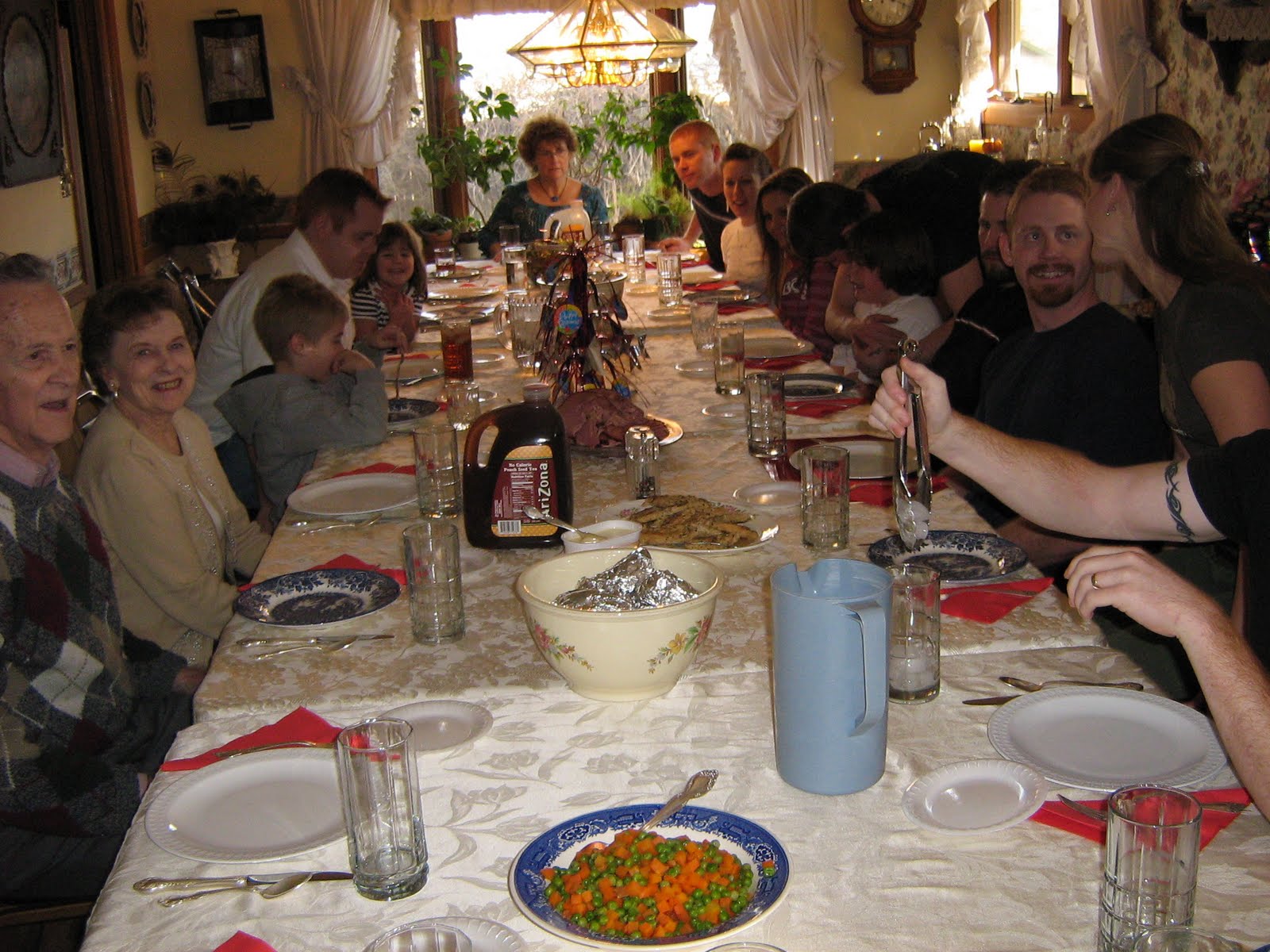
The family holiday scene, left, represents a variety of cooperative and collaborative dynamics. Those dynamics contribute to make the event a success--or a disappointment. Some of the dynamics represented there are complex and demanding. Others are simple and comparatively "free"--all a person had to do was "show up."
In general relationships are about cooperation and collaboration. Of course cooperation and collaboration can happen at many levels. Cooperation on a championship football team, for example, requires a high degree of complex behavioral dedication to a collaborative effort. By comparison, your daily relationship to your neighbor, although you share some geographic proximity, may require little cooperative or collaborative energy at all.
In my book, Smarter Romance, I discuss the merits of people dating around some mutually agreed upon themes. I encourage dating partners to think of themselves as a team. SR helps couples explore the merits for dedicating themselves, from the very beginning of a dating relationship, to the idea of working together as teammates. Consequently, their initial shared goal is about getting to know each other just well enough to launch into a shared project. They do so with the understanding that they will learn a lot more about each other in the process of working together.
The "getting to know each other" process enlists teammates immediate and active dedication to accomplish something constructive--something they can have fun accomplishing as a team. I call these constructive events "projects," and they can be as simple as building and flying a kite, tag-reading through a book together, or planning a surprise birthday party for a mutual friend. On the other hand they might be comparatively more complex, like planning and then coordinating a big, fun happening for friends, volunteering together to help build a house through Habitat for Humanity, or orchestrating a cross-country trip.
So, the agenda for your first date is already set. It's specific and simple: Get initially acquainted by asking each other a lot of good questions! (Of course you can do this over coffee or dinner or...?) The idea at this point is to discuss the things you both like; discover what kinds of things you are each into? This initial effort shouldn't take more than an hour or two and the information will help you get a sense for the kinds of creative projects you might want to set-up and tackle together as a team. Perhaps you realize after even this first date, "Nope, I really don't want to spend any more time with this person." That's real; it's OK.
If you decide on a second date together, your agenda is effectively set. You can meet to firm up what you want to do and how you want to do it together, or you can launch out into your first shared project. Your pooled efforts to accomplish something will quickly uncover a sense of purpose beyond the usual contemporary and predictable dating events with all their associated lulls, surprises, and confusion. "Themes" will quickly and spontaneously play out of what you choose to do together and they will help you identify a larger meaning and purpose for your developing relationship whether it proves to be long or comparatively short.
SR is about character development through constructive dating relationships. Give it a try! You've got everything to gain. Learn more from previous postings, and by all means SIGN UP for the updates, then let me know what you are thinking...leave a comment.
So, until next time...have fun, be safe, and be smart!
Dick
Monday, October 11, 2010
Practice Makes Perfect
I was also a trumpet player. I've met a bunch of them through the years. (But nobody like the young man in this video.) I started playing in the sixth grade and then played throughout junior high and high school. I was a pretty good trumpeter, too. I took private lessons for a while--off and on. I was generally first or "second chair" in the band. (I never felt I had had the time to play in the orchestra but I gave the jazz band some serious thought.) Then I thought about playing when I went to college. But I decided my engineering classes demanded more time than I could spare if I was in the band and trying to study for the applied science and engineering classes. It took a lot of practice to get good and stay good, and if I was going to do it I wanted to be one of the best.
I can still whistle. I can probably still "play" the trumpet, too. (Nobody would want to hear me.) It's interesting how that works, because even though its been many years since I picked up a horn and gave it a serious buzz, there is a lot about it that still feels natural. My fingers can still do the scales and "read" the music even though I can't remember consciously how to do the fingerings--the fingers just "do" it--they somehow know.
As a general rule we get good at what we practice. It gradually becomes part of us. In the case of things we want to get good at it's a good thing. But practicing can also be compromising. As a sophomore in high school I had a good friend, (I'll call him) Ted. Ted and I had grown up in the same neighborhood. He lived half a block from my house. We spent many hours together. Fun in the neighborhood, birthday parties, classes at school, Cub Scouts and the Boy Scouts, summer baseball...you get the idea. The problem really started shortly after we were becoming men--blame it on testosterone? No. But it was about that boy becoming a man process and how Ted focused it's influence on him. Yah. He would spend hours looking at his dad's girlie magazines. Playboy was one of his favorites.
But I was of course a red-blooded, 98.6 degree Fahrenheit, Caucasian male, too. (I still am!) I enjoyed looking at those with him, but I became mildly concerned for Ted about the way he would create stories around those pictures. We'd be in his room and he'd start up, "Here's what I would do if I met her in the hallway, or if she came to my room at night..." Then he would rehearse a very elaborate scenario, obviously well-practiced, and he'd unflinchingly act it out detail by small detail. He had many of these. They were little "one man vignettes" each with a bucket full of scintillating plots and scenes carefully choreographed; all-male stuff reaching for and ending punctuated with orgasmic sexual fulfillment.
Long story short: I was uncomfortable! I don't remember what I said to Ted in those moments. I do remember finding excuses not to go over to his house when he'd call. Then months flew bye. Gradually we spent zero time together. As you might guess, by the time we were seniors at CHS we'd become "just good ole friends," old acquaintances. We had developed different sets of social connections and effectively walked out of each others lives.
I was in college at OSU when I heard the sad news that Ted was in trouble. He was messed up. A woman had charged him with sexual assault. All those uncomfortable experiences I'd had with him there in his house, all my discomfort, it all came flooding back from my memory banks. I realized how all that hungry sexual appetite and behavior Ted carefully, albeit tragically, trained had turned to devour him.
Since that time researchers have learned a lot more about the relationship between people's thinking, fantasy-behavior, and its impact on reality. It boils down to this: Practice makes perfect. Of course in reference to it's impact on Ted, a similar colloquial way of saying it is, "Garbage in, garbage out," or in a Biblical phrase, "You are what you think!" Ted was seduced by a hormonal buzz. He embraced it. Stupidly then, he dedicated himself to practice a way of being with women that ultimately he acted out--and maybe more than once before he found himself in trouble? Whatever, it didn't have to happen! It did.
Smarter Romance (SR) understands Ted's situation. In fact, SR exists, in part, because of my old friend--and so many other "Teds" just like him. SR recognizes and appreciates the mystery, frustrations, and the joy we all experience as Guys and Gals in daily male-female interaction. SR is about learning and practicing a healthy, fun, and character-developing set of disciplines that will serve your relationships for decades. So, whether you are 13, 31, or 81 "practice still makes perfect." So, here's the awkward question: "What are your dating expectations, and are you stupidly training any not-so-complimentary "secret" male-female behavior? If you are, what are you going to do about it?
Have fun, be safe, be smart.